My Travel Tales

Doing More For Polar Bears

November 17, 2009 · Leave a Comment

November 14, 2009
Churchill, Manitoba

Today was our final day in Churchill.  It always seems to come to a close too quickly.  As we ventured out, another group arrived to take our place at the Studies Center.  Depending on the weather, it’s possible the bears will only be on land for another few days or a week before the ice freezes and they’re able to commence their hunting and feeding season.

Churchill Candlestick Sunset

Churchill Candlestick Sunset

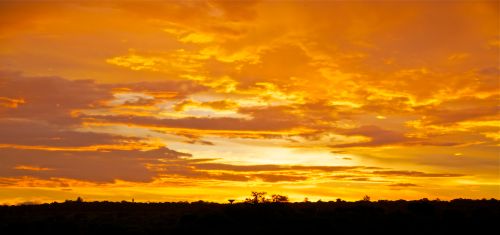
When we were reunited with our peers last night, those of us who went on the tundra buggy yesterday learned that the rest of the group also experienced a magical day.  They too were treated to a bear approaching the bus in close proximity and a display of bears sparring just off the side of the road.  And, of course, the candlestick sunset was in view to all those who were fortunate enough to be outside last night.  Unobstructed by large buildings and developments, Churchill sunsets are spectacular and seem to overtake the entire skyline, not just the West coast.

Another bear visited us at the Studies Center last night.  Most of us were upstairs for the evening’s class and did not see the bear.  However, a few members of our group, too tired to focus on the evening’s lessons, were resting in the quiet lounge and were again surprised by a bear that pressed its face up against the window.  J.D, Logan, Deborah, and David notified Studies Center staff about the bear and were able to capture a few pictures before the bear was scared off once more.  I saw some of the pictures and if any are emailed to me, I’ll post them here.  Again, the zoo imagery struck me with irony.  Although Studies Center staff couldn’t allow the bear to remain in such close proximity, I was happy we got to experience the feeling of being locked behind bars while a large, potentially dangerous creature observed us curiously.

polar bear close up

Polar bear close-up

We saw a few bears today, including another that walked right up to the window of our bus.  The bear got so close that we were instructed to close our windows.  After some bear observations, we pulled off the side of the road to build an igloo.  Chuck instructed us about how to cut and stack the ice to create the igloo structure.  Once built, we took turns crawling inside the igloo to get a sense of the warmth and cover it offered from the elements.  Chuck told a story about an igloo he built a couple years ago.  He said that it was so cold and stormy out that as soon as he completed the igloo an Arctic fox darted inside and curled up.

igloo building

Building an igloo

It was noticeably colder today, with fog and snow drifting around us.  We took a walk through the forest while Chuck pointed out the vegetation and various food sources it offers Arctic critters like hares and foxes.  We picked and tasted crowberries.  This forest outing was more pleasant than last year’s version that had us standing in 30 below temperatures, among several feet of snow.

On our way back to the center we stopped by a crashed plane that remains untouched among the rocks and terrain of Churchill.  The plane has been nicknamed “Miss Piggy” and ironically crashed in 1979 while carrying a large load of soda rumored to be Coca Cola (a company that adopted polar bears as its mascot) over the region.  I’m not sure why the plane hasn’t been hauled away, but it’s quite a sight to see lodged among the rocks.

We went back to the Studies Center, had a nice meal, and gathered our luggage.  Our departure from the Studies Center was delayed briefly when, once again, we were visited by a polar bear. After the bear moved out of the area and we could safely leave the Center, we headed for the train station. We passed by our igloo on the way to the train station and pulled over to have another look.  It was dark outside so Chuck crawled inside the igloo and illuminated it with a flashlight so we could get a sense of how it would look with a fire burning inside.  We boarded the train, most of us expressing sadness to be departing the wonder of Churchill and the polar bears.

I was heartbroken to be leaving.  Throughout the duration of our stay, we learned more about the political issues in Churchill that make it difficult to further protect the bears and prosecute some of the unscrupulous people that are exploiting them.  Tourism generated by people wanting to see the polar bears is the primary source of revenue for the town, so people are resistant to further regulate tour operations.  There’s a lot that needs to be done for the polar bears of Churchill, both locally and globally.  There are initiatives I’d like to become more involved in, some that are more challenging to take on from a distance.  Having witnessed the corruption of some tour operators and photographers, I began contemplating what it would be like if all humans left the Churchill area and let polar bears live undisturbed.  The bears would still face the threats of our global impact on the Arctic region, but it seems several unnecessary day-to-day stresses would be eliminated without our presence on their land.

On the flip-side, it could be argued that studying the bears is a necessary means to help sustain their population.  And I know from personal experience that my encounters with polar bears have sparked positive lifestyle changes in those I’ve shared stories with and those whom have read my blog.  I certainly intend to make this annual journey for as long as the trip is offered and the bears are in existence.  At the same time, I’d love to see some additional regulations implemented by the town of Churchill.  Perhaps they could institute limited visitor permits, impose a tax on tour operators to accrue more funds to help study and sustain the bear population in the area, fine and prosecute those who bait bears for personal gain and profit . . .

bear eyes

An important question

The vivid dream I had that sparked my initial Arctic expedition one year ago involved an interaction with the last polar bear on Earth.  He was sitting on the last piece of remaining ice, looking at me as if to say, “What are you going to do?”  As I looked into the eyes of the polar bears we encountered during this  year’s journey, I saw them asking the same question.

I intend to become more informed about the local issues in Churchill. I intend to find out how, as the people bringing an influx of revenue-generating business to the area, we can further influence additional changes to help protect the polar bear population in Churchill.  I am also committed to further personal lifestyle changes to minimize my impact on climate change, as well as becoming more informed and involved in the global issues that threaten the sustainability of the polar bear population.

What are you going to do?

→ Leave a CommentCategories: Polar Bears
Tagged: , , , ,

Another Magical Day With Polar Bears

November 17, 2009 · Leave a Comment

November 13, 2009
Churchill, Manitoba

Polar bear cub

Polar bear cub

Last night a polar bear visited us at the Studies Center.  Following dinner and preceding our evening lecture Shannon heard a loud knock at one of the side doors.  The door leads outside from the quiet lounge area and is not used by visitors to the Center.  This entrance is specifically used to load luggage in and out of the building.  A new group of students was expected at the Center last night so when Shannon heard the knock at the door her first assumption was that a representative from the new group was at the door.  Thankfully, before she considered opening the door Shannon thought aloud, “I wonder if there’s a bear out there . . .” Shannon’s statement prompted Jenny, a volunteer at the Great Bear Foundation, to look out the window.  Sure enough, there was a large polar bear, standing upright, banging forcefully on the door.

The bear made its way to a window in the quiet lounge and peered in at the guests who were gathering for an impromptu happy hour glass of wine.  After satisfying its curiosity with that room, the bear walked around the building and pressed its face against the window of one of the dorm rooms.  Our classmates Jeremy, Elissa, Steven, and Christina, were startled by the bear’s big face in their bedroom window.  Within minutes the Studies Center staff scared the bear away by firing flares into the sky.

For me, this close encounter with a polar bear at the Studies Center sparked images of the zoo.  In this case, we humans were in a building, behind windows secured with bars, as polar bears looked in at us with curiosity.   It seemed a fitting display of karma, and while safety is imperative, I was happy that we were all reminded of our place in Churchill.  This is the polar bear’s home, they have the upper-hand here – we are the strange alien creatures in their land.

This morning approximately half our group (myself included) set out on a Tundra Buggy to get a closer look at the bears.  I have mixed feelings about the buggies.  Their impact on the tundra is a hot topic and disputed from both advocates and protesters.  At the same time, the buggies potentially allow us to get closer to the bears and observe more of their natural behavior.  This year we’ve been fortunate to have many close encounters with bears right off the main publicly accessible roads in Churchill. I considered giving up my space on the buggy, but I’m happy I maintained it.

Using a rock as a pillow

Using a rock as a pillow

From the buggy we saw 5 different sets of moms with cubs ranging in age from 10 months to two years old.  The first mom we saw was walking with her male cub that was almost the same size his mom.  Once she assessed the area and felt her cub was safe, the mom found a rock to use as a pillow and rested comfortably.  Meanwhile, the curious young cub made his way up to our buggy.  I had my telephoto lens on, so at a certain point the bear was too close to photograph.  This was actually a blessing – it allowed me to put the camera down and observe the bear through the open window and the back deck.  On several occasions the bear made his way toward me on the buggy and looked at me with curious, sweet eyes.  I feel a deep connection with the bears, an understanding, and an unspoken communication.  Their eyes share a story of vulnerability and playfulness.  In these moments it’s important to remember their sheer strength and power.  One look at a 900-pound bear crossing the ice serves as a quick reminder that any encounter closer than the one we were experiencing could be deadly.  After inspecting the buggy from all angles, the cub made its way back to his mother and rested by her side.

Sparring  polar bears

Polar Bears Sparring

Just as were about to pull away and continue down the path, we saw 2 bears that had previously been resting approach each other.  “It looks like we might see some sparring,” our buggy guide J.P. noted.  He turned the vehicle off and we observed the sparring bears for what seemed to be at least half an hour.  Sparring is a natural play-fighting that allows the bears to practice for the real battles they face during mating season.  Male bears in Churchill outnumber female bears by an estimated ratio of 3 to 1, so often males need to fight for mating rights.  The 2 bears sparred for a while and then a third bear approached.  All 3 bears circled each other, assessing another sparring match.  2 bears – one that fought previously and the new bear – engaged in another round of sparring.  The third bear, tired from the first match, made its way to our vehicle and inspected us curiously.

As the sparring bears concluded their match, a mom, followed closely by her 2 young cubs

mom and cubs

Mom and cubs single file

approached us from the other direction.  The cubs were born in January and walked in a single-file line behind their mother.  A male bear was following them at a distance.  Hungry male bears will attack and eat cubs, so the mom was moving her cubs swiftly to safety.  Once the mom and cubs got a safe distance from the male, she laid back on the ice and we watched as she nursed the young cubs. We counted our blessings again as it’s rare to observe nursing behavior.

All in all we counted close to 40 bear sightings today.  It was extremely special to observe the sparring and nursing behavior and to have the bears approach us so closely.  As we headed back to town toward the end of the tour we came across an older male bear that was quite a character.  He was rolling over, biting his paws, and stretching.  When he noticed us, he lifted his head and looked at us between his legs, then went back to his playful polar bear

Polar bear yoga

Polar bear yoga

yoga.  He was extremely flexible, pulling his back legs over his stomach and up toward his mouth.  He looked at us as if he knew were taking pictures and he was hamming it up for the cameras.  As people cooed about how “cute” the bear was, we were once again reminded of his power.  After another half hour of playful stretching and tumbling, the bear sat up.  When he arose, back to us, we could see the battle scars from fights during the years.  J.P. estimated that the large male was 6 to 7 years old.  It’s almost as if our “cute” bear friend wanted to remind us of his size and power, being sure to sit up before we pulled away.

We saw several bears resting; other younger bears were out testing the ice.  We watched as one bear hopped from one block of ice to another and practiced thumping the ice with its two front paws.  Another mom with two slightly older cubs approached us as we made our way back to town.  Again, the bears were too close to photograph.  I spoke softly to the bears as they approached me on the buggy.  Then I heard J.P., “look at that sunset!”  We turned our attention away from the bears and saw an exquisite sunset.  I’ve seen a lot of beautiful sunsets throughout my travels and at home over the Santa Monica ocean, but this sunset with its beam of light radiating from vertically from the horizon through the sky was the most magnificent sunset I’ve seen.  Later I learned that this type of sunset is often referred to as a candlestick sunset and is quite common in the North.

As with the magical bear, fox, sunset, Arctic hare day that preceded today, tonight’s sunset punctuated another perfect day.

Churchill Sunset

Churchill Sunset 2

→ Leave a CommentCategories: Polar Bears
Tagged: , , , ,

Looking Into The Eyes of Polar Bears

November 17, 2009 · Leave a Comment

November 12, 2009
Churchill, Manitoba

bear gazing at water

Bear gazing at the Bay

Last night, prior to our Northern Lights outing, Chuck taught us about Arctic ecology. We learned about some of the factors contributing to climate change and why the Arctic region is so vulnerable. The opening up of the Northwest Passage and increased offshore drilling put this area at further risk. Chuck encouraged us to learn more about Russia’s direct involvement in this area as well as becoming more informed about Alaska’s offshore drilling and hunting policies. Chuck mentioned that one massive oil spill in the Arctic would be enough to destroy the region. He also stated that if policies remain consistent and without better regulation, the entire population of Polar Bears in Alaska could be extinct within 5 years.

I wanted to get a sense of the number of bears in the Churchill region and to get a better understanding of the threat to the Churchill bear population. Are the Churchill polar bears in as grave danger as those in Alaska? I asked several biologists in Churchill as well as a representative from Polar Bears International about the current population of polar bears in the region. Estimates ranged from 600 to 900 polar bears depending on the source. The Hudson Bay extends further South than other Arctic regions and is also where the ice freezes first, so bears migrate here from both the North and the South to get out on the ice and hunt seals. This migration and the decrease in funded research makes it difficult to know for sure how many bears are “residents” of Churchill versus those passing through to hunt seals when the ice freezes. While it’s difficult to get an exact count of the polar bear population in Churchill, everybody seemed to agree that it’s fewer than 1,000 bears.

Polar bear eyes

Face to face with a polar bear

Having spent the past 2 days (and several days last year) gazing into the eyes of polar bears it saddened me greatly to have an even better understanding of their potential demise. Having an awareness of the climate change issues facing the Arctic region is different from experiencing its impact first-hand. There are things we can do individually to help decrease our contribution to climate change: utilizing high efficiency appliances, light bulbs and low-flow or dual flush toilets; walking or cycling when possible instead of driving; ensuring car tires are properly inflated for maximum fuel efficiency; offsetting our carbon footprint by contributing to clean energy alternatives, etc. Stop Global Warming lists several simple actions we can take as individuals to minimize our personal impact. Climate change is also a global issue – there’s a need for tighter regulations of offshore drilling, it would behoove North America to take a more vested interest in Russia and their perceived “ownership” of Arctic waters. We can pressure our government representatives about these issues, those of us that are eligible can run for political office, we can help educate people about these issues (as Chuck continues to educate those of us in his Arctic Ecology Field Course).

bear with bone

Bear with bone in mouth

With the reminder of threats facing the polar bears and Arctic ecology fresh in mind, we set out for another day of bear watching. We tracked one bear that seemed to be on a mission, with a very clear path. He moved swiftly over the snow and rocks, pausing every few minutes to sniff the air before taking his next step. The sense of smell is a polar bear’s strongest sense – it’s how they locate a suitable food source, typically seals. It’s estimated that polar bears sense of smell can range several miles, including underground and through the thick Arctic ice. The large bear made its way toward another bear that was sleeping at the base of rocky hill. We thought perhaps there could be an interaction between the bears – maybe some sparring. Instead, the bear found a large leg bone of an unidentifiable animal. Based on the length and structure of the leg bone Chuck guessed it could have come from a caribou. The bone was out of place and it’s speculated that it was bait placed by tour operators or photographers to lure the bears closer to areas accessible for public viewing.

One of the most disturbing things I noticed during this trip is the double-message humans are sending to bears. There are various methods of baiting bears that we observed, all of which lead the bears closer to human interaction. Yet when a bear gets “too close” people shoot flares and cracker shots at it. If a bear is considered to be a nuisance, it’s darted and placed in Polar Bear Jail where it sits caged, in a metal and concrete building, until the ice freezes and it can be transported further from town. Sometimes bears are transferred from jail before the ice freezes, but as long as a bear is in jail we’ve removed it from its natural life cycle, rhythm and interactions with other bears.

The alternative to bear jail is likely that the bears would be shot and killed. So while the jail is a more humane and preferred method of limiting unwelcome human-bear interactions, it’s our responsibility as people invading the bear’s habitat to minimize the number of bears that end up in jail each year. The more responsible we are with our human behavior, the less likely polar bears will engage in unwanted bear behavior.

Little bear gets out of the way

Little bear moves away from the larger bear

We watched the two bears, as the larger bear inspected the leg bone, the smaller bear that had been there first slowly walked away. The smaller bear instinctively knew it was no competition for the large bear and that it needed to move out of the way and let the large bear have the bone. As the bigger bear gnawed on the bone, the little bear maintained a substantial distance and stood submissively, head down.

We continued driving the roads of Churchill and observing numerous bears. We saw bears crossing the road to get closer to the shore, conserving energy and resting, testing the strength of the ice and generally preparing for the imminent hunting season. It took longer for the ice to freeze last year so the bears got a late start. Luckily, the ice remained intact later into the Spring than usual, allowing some moms and new cubs additional hunting time upon emerging from their dens toward the end of the season. This additional time to hunt helped further sustain the adult polar bear population as well as that of the young cubs. We’ve seen a few skinny bears during this trip, but all in all, the bears seem to be in better shape and stronger than they were last year at the same time.

We enjoyed a beautiful sunset before returning to the Studies Center for another informative evening lecture followed by the ritual late-night gathering in the kitchen.

Churchill Sunset

Churchill Sunset

→ Leave a CommentCategories: Polar Bears
Tagged: , ,

A Magical Day With Polar Bears, Foxes, and Northern Lights

November 17, 2009 · 2 Comments

November 11, 2009
Churchill, Manitoba

Polar bear stroll

Mid-morning stroll

As with last year, there’s a tribe of people who gather in the kitchen with whiskey and beer after the day’s adventures and classes have concluded.  It’s a convergence of two different groups of students and biologists, sharing bear stories, ghost stories, and exchanging ideas to make positive change.  The late night kitchen gathering is one of my favorite parts of this annual adventure (yes, I will be back every year) and I find it hard to tear myself away during the early morning hours.  It’s even harder to get away when excusing yourself leads to group protests and pleas to stay for “just one more story.”  Eventually, one by one, we make our way to bed between 1:00am and 4:00am and before you know it, the alarm is going off to signal another day of Arctic adventures.

As we were on our way toward the coast to observe polar bears this morning, a bear crossed the road ahead of us.  He took his time, enjoying his walk, as we pulled off to the side of the road to appreciate him.  When he crossed the street, the bear turned and looked at us and then started scratching his neck on a sign.  I crept down the steps leading to the open bus door and took a picture of the bear standing behind the sign.  It wasn’t until we returned to the Studies Center this evening and I transferred my pictures to the computer that I saw what the sign said: “Please Do Not Disturb.”  When thinking about climate change and our impact on Arctic ecology, this picture sends an important message. (More after the picture)

Please Do Not Disturb Polar Bear

Please Do Not Disturb

We continued to make our way to Cape Merry, spotting bears and observing their behavior.  We also noticed that more sea ice had accumulated in the bay overnight.  Chuck told us that with a few more nights below freezing the ice would solidify and the bears would be able to go out and hunt again.  We saw several bears along the coast, looking at the water as if they were willing it to freeze.

Looking for a place to rest

In search of a quiet place

We saw quite a few bears along the way to Cape Merry and it was a beautiful, sunny day.  One bear was sleeping in a patch of willows close to the side of the road.  There were several trucks that pulled over to watch the bear.  Seemingly aware that he was under observation, the bear stood up purposefully, looked at us and crossed the road.  Why did the polar bear cross the street? To get some rest.  Once safely on the other side of the road, the bear traversed down a little hill and laid down, barely within view.  One by one the trucks of onlookers pulled away.

When we arrived at Cape Merry we noticed a lot of fox tracks, but we didn’t see any fox.  It was almost as if the foxes were taunting us with their tracks: “Look over here!” “Oh, now I’m over here,” “You just missed me!”  After spending some time at Cape Merry, looking at the fort and learning about the history of settlement in Churchill, we boarded our bus.  We only saw one Arctic fox last year and it was during a 6:00am bear watch so it was still dark out.  I was really hoping we’d encounter more foxes this year and was encouraged by the number of

Arctic Fox

"I'm up here!"

tracks we saw.  Just as everybody succumbed to the idea that the foxes around Cape Merry were out of view, a little white Arctic fox appeared on the side of a hill.  The fox made its way up the hill as we pulled over once again to watch it.  We all reached for our cameras and got some great pictures of the fox, backlit, on top of the hill.  Arctic foxes always appear joyous, as they seem to bounce around the snow and rocks.  When you actually do see an Arctic fox it’s as if the fox knows you’re taking pictures and it provides picture perfect poses in the best light of day.

We continued making our way out of Cape Merry until somebody spotted another fox coming down a hill.  This time it was a cross fox – a mix between a silver fox and a red fox.  The dark, multi-colored fox was digging and burying its nose in the snow.  Then, the cross fox looked up at us, nose covered in snow, and made its way toward our bus.  The fox observed us curiously before running off alongside the hill again.

Just as we were pulling out of the main road that leads to Cape Merry somebody yelled out

Cross Fox

Cross Fox

“fox!”  Once again, we pulled over to have a look. This time it was a beautiful red fox, curled up asleep on the rocks.  We all expressed our gratitude and feelings of being blessed with several fox sightings.  Not only did we see 3 foxes today, we saw 3 different kinds of foxes.

We made our way back to the Studies Center and felt satisfied, having seen at least 10 polar bears and 3 foxes in one day.  After dinner and our evening lecture, Frank told us that if the Northern Lights were out tonight, he’d take us to see them.  Sure enough, around 11:00pm we got word that the Northern Lights were visible.  Those of us who were awake boarded the bus and drove approximately one mile, away from the light of the Studies Center to see the Lights.  We were awestruck as we watched the Northern Lights display.  The green light morphed and shape-shifted, at times appearing to cover the entire sky, all the way down to the horizon.  In line with our perfect, magical day, we saw 3 shooting stars among the Northern Lights.

As the lights faded and the display subsided, we boarded the bus and made our way back to the Studies Center.  Just prior to pulling into the parking lot, an Arctic hare hopped right across our path – a magic rabbit to bookend a perfect day.

Northern Lights

Northern Lights (photo courtesy of Jeremy Beheler)

→ 2 CommentsCategories: Polar Bears
Tagged: , , , , , ,

The Pictures Say It All: Polar Bears, Foxes and The Arctic

November 12, 2009 · 2 Comments

November 11, 2009
Churchill

The pictures say it all. Another amazing day in Churchill.

Speed Limit

Do Not Disturb

Yawn

Polar Bear

Bear Sticking Tongue Out

Peek-a-Boo

Arctic Fox

Arctic Fox Lookout

Cross Fox - Silver Fox + Red Fox

Snowy Face Cross Fox

Snowy Face Cross Fox

Cross Fox Yawn

Northern Lights

All photos taken by Colette Weintraub, except Northern Lights by Jeremy Beheler

→ 2 CommentsCategories: Polar Bears
Tagged: , , , , ,

The First Polar Bear I Saw Today

November 11, 2009 · 1 Comment

November 10, 2009
Churchill

3rd polar bear

The third polar bear I saw today

I wish I could describe the feeling I get every time I see a polar bear. The polar bear is one of the most magnificent animals I’ve witnessed in its natural habitat. The weather was perfect for spotting bears today and the bears were quite active. It’s been one year since I last saw the bears of Churchill and seeing our first polar bear today made the small Arctic town feel like home.

The picture of the bear to the left is actually the third bear I saw today. The first one was out near some Tundra buggies, moving away from the vehicle and the group of people trying to catch a glimpse of him. I did capture a picture of that bear, but it’s at quite a distance.

The second bear I saw today was lying peacefully along the horizon. We observed him for a while.  He was huge and didn’t budge an inch.  He was also quite far away, but I’ll include a picture of him below because it gives a sense of his size.

Bear on road

Polar Bear walking up the road

The third bear we came across actually came across us.  He was crossing the road we were driving on.  Ironically, we were looking to the right, toward the bay, in the same direction we’d seen the other bears.  “There’s one on the road ahead of us,” somebody in our group called out. It was a classic case of looking for something and not seeing what is right in front of you.  We slowed the bus and watch the handsome bear walk up the hill, along the road.  He was a really cool bear.  He’d take a few steps, look at us to let us know he knew we were there, and then keep on walking. It was just about dusk, and as the sun was approaching horizon, the bear seemed to be appreciating the setting sun.  Eventually the bear made his way down the hill, behind some rocks, and we lost sight of him.

The next bear we saw was also crossing the road.  This bear was running from some trucks that were following (or perhaps chasing it).  Once the bear crossed the street, the trucks stopped to take photographs.  We were told people may have been trying to move the bear away from some sled dogs.  The Arctic is a strange place – it’s mysterious.  It’s easy to jump to conclusions and think you saw something, but ask a few people and you’ll hear as many different perspectives as people you asked.  Sadly, a bear was killed today (further North than where we are).  The hunter and his grandson say it was self defense.  We’ve also heard that they were out hunting, with the intention of killing a bear.  Another person said the news reported that the grandson got stranded on sea ice, with a mother bear and her two cubs for a couple days. That doesn’t sound quite so innocent to me.  I cannot imagine how or why people hunt polar bears.

Swimming polar bear

Swimming Polar Bear

Thankfully, this bear crossed the road and realized everything was okay.  We saw the bear looking out at the water and looking back at us.  Then, the bear seemed to disappear.  We traveled a bit further down the road, rounded a corner and saw something I’d previously only seen on TV — the bear was swimming.

We looked at his fresh tracks in the snow and watched the bear swim for a while.

We saw several more bears walking across the tundra, and down through the trees.  Then, we saw a spectacular sunset and called it a night. . . almost. . .

As I sat here writing this, a few of us on the late-night shift heard the Northern Lights were out.  We quickly grabbed our boots and ventured outside again, this time in our pajamas.  Before we left the building we looked left, right, up, and down to make sure there weren’t any bears hanging around the door.  We sat in a vehicle, watching the glowing green lights in the sky morph and change shapes before our eyes. This is the second time I’ve seen the Northern Lights (the first was from the train last night) – a perfect bookend to an amazing day.  Just before we headed back to the Center we saw a shooting star among the Northern Lights.

Here are a few pictures from today:

bear on horizon

Bear on the horizon

IMG_3908

IMG_3913

IMG_3915

IMG_3927

Look by water

Polar Bear Tracks

Polar Bear Tracks (next to a pack of gum for perspective)

IMG_3989

→ 1 CommentCategories: Polar Bears
Tagged: ,

Reuniting with Polar Bears

November 10, 2009 · Leave a Comment

Sunday, November 8, 2009 – Tuesday, November 10, 2009
Train from Winnipeg to Churchill

Polar Bear

One of the polar bears I met in 2008

When I returned from Churchill last November I knew I’d go back. . .  someday.  Last year’s trip was an extraordinary adventure that allowed me to come face to face with the amazing white bear.  My first Arctic expedition was sparked by a haunting dream that I was sitting with the last polar bear on Earth, trying to figure out how to save him.

My chronicles of adventure, stories about the bears, lessons about Arctic Ecology, and pictures were featured on MySpace’s OurPlanet for a month following my trip.  I partnered with MySpace to help raise awareness about the impact climate change is having on the Arctic region and the polar bears, through my personal account and eye-witness experience.  My inaugural journey is detailed earlier on My Travel Tales.

What I found following that adventure is that everybody I spoke with – friends, family, colleagues, strangers on airplanes – was extremely moved by my stories and pictures.  We all hear about climate change.  Most people are aware of it.  Some people refuse to believe it. We hear about it on the news.  People like Al Gore and organizations like Stop Global Warming make sure we have access to the latest information and tips about what we can do to help.  But for most people, the effects of climate change and our individual and collective responsibility for it, remains one-step removed.  It’s far more impactful when somebody you know, even if you’ve just met them, can share a first-hand experience with you.

For this reason and because I fell in love with the polar bears and the amazing scientist and his team with  whom I traveled, I knew I would be back.  However, I thought perhaps I’d return in 2010.  The world is large and I’d like to see as much of it as possible, so I often don’t do repeat visits when traveling abroad.  I knew I’d return to Churchill just as I know I’ll return to Bali, but this journey came more quickly than I expected.  In fact, as November approached and I was feeling disappointed that I wasn’t going on the sold-out trip, I received an email from Shannon at The Great Bear Foundation: “We’ve had a cancellation. You’re first on the wait list.”

I’m doing the trip slightly differently this year.  Last year I met the group in Missoula, Montana for a 24-hour bus ride, followed by a day and a half on train.   I highly recommend that route for first-time travelers because you get more time with Chuck Jonkel, the scientist who’s headed up this trip for 25 years.  As you make your way up to La Pas from Missoula, he points out the vegetation and wildlife and signs of climate change along the way.  He also teaches you about bears and has some amazing stories to tell.  It’s also a great way to get to know the group of fellow adventurers.  Most of the people who embark on this journey are word travelers and conservationists themselves and they have amazing stories to tell as well.

This year, I picked up the train in Winnipeg.  There’s an extra day on the train but it’s far more comfortable than the bus ride.  Chuck and the rest of the group are scheduled to meet up with us and board the train sometime in the middle of the night.  As with last year, I embarked on this journey alone.  As with last year, I’ve already made some good friends.  Although I should know better by now, it always surprises me how quickly a trip like this can turn complete strangers into a distinct family unit.

In addition to the bears, Arctic fox, Arctic hares, Northern Lights, hot chocolate and other wonderful experiences this trip offers, it forces me to get out of my daily routine.  It broadens my perspective more than many trips I’ve been on precisely because the people on this trip are all making the long journey together, with the passionate desire to see polar bears and observe their behavior in their natural habitat.  People on this trip come from diverse backgrounds, the majority of them do everything they can to avoid large cities. So the conversations alone allow us to connect about things that are different from my day to day.   Traffic, the internet, going out late to see live music – these topics don’t arise in conversation. Grandchildren, forests, wildlife, ecology, biology, and books are commonly discussed.

Monday, November 9, 2009
It’s now Monday morning.  Sometime in the middle of the night, Chuck, Shannon, Bob, Frank, and Jenny from The Great Bear Foundation boarded the train, along with the rest of our group.  They met us in La Pas after driving for 24 hours from Missoula, Montana.  Ordinarily, I might have been less-than-thrilled to be awoken shortly after finally falling asleep, but when I opened my eyes and saw my old friends, I couldn’t have been happier.  Unless you’re in a sleeper car, it takes a while to settle into a comfortable sleeping position on the train.  In my case it had taken 3 hours to get just comfortable enough, so before I jumped up to hug my friends from The Great Bear Foundation, I made note of how where my head, legs, back, and feet had been perfectly sandwiched in the seats.

After hugs and “hellos,” we stayed awake and caught up for a bit.  We reminisced about stories from last year, which included 30-below weather and some unruly (and exceptionally fun) behavior on the train.  Chuck also told us stories of his various haphazard adventures, “Only the incompetent have adventures,” he said with a chuckle.  “The weather’s been nice so far – I don’t see why it can’t stay nice another few days,” Chuck noted before heading back to his sleep.  Reunited with our group and a day closer to seeing polar bears, it was easy to fall back asleep.

When I awoke this morning, the sun had just risen and was reflecting off of a lake on our right.  I noticed that a good portion of group was no longer in our car.  “Where is everybody?” I asked Shannon, clearly not awake enough to realize they couldn’t really be far.  People had started to make their way to the dining car for breakfast.  Shannon and I joined them for the next seating and continued to catch up.  Even the merging of the two groups of travelers – Missoula and Winnipeg – was effortless.  Two became one overnight and now we have our polar bear family.

We’ve got another day on the train and are scheduled to arrive in Churchill at 7:00am Tuesday.  “What are you going to do?” a nice woman named Anya asked after breakfast.  “Y’know – sleep, read, and write . . .”    One down, two to go.

Tuesday, November 10, 2009

Time on the train passed quickly on Monday.  As we moved North from La Pas toward Churchill we picked up some commuters from the tiny villages along the way.  The locals were going into the next “town” to do their regular (possibly only once monthly) shopping.  The train only passes through every 2 days, so going to the grocery store is a 48-hour commitment.

But passengers continuing on to Churchill had one thing on their mind: polar bears.  As we pulled into the Churchill station just after 7:00am, we saw several fresh polar bear tracks and a lot of fresh fox tracks.  We also saw an unidentifiable dark brown or black animal heading East, away from the train.  It was either a fox or a wolverine (a few had been spotted just off the side of the road at about that same time.

We gathered our luggage as quickly as we could, loaded up the vehicles, boarded a bus, and headed for the Research Center that we will call home for the next few days.

To be continued. . .

→ Leave a CommentCategories: Polar Bears
Tagged: , ,

Kauai: Through The Eyes Of An Adventurer and A Local

September 24, 2009 · Leave a Comment

September 17 – September 22, 2009

Where have I been?! The lack of updates here has not been for a lack of travel.  However, all of my travel this year has been within the Contiguous United States, much of it surrounding live music events.  I’ve been to Austin for SXSW, New Orleans for JazzFest, Michigan for Rothbury Festival, Santa Barbara for Nine Inch Nails – you get the picture.  As a result of all of this “music travel” and my desire to write frequently, I started an additional blog:  Rock Is A Girl’s Best Friend.  While not chronicling my travel tales, I have been blogging about my live music experiences.

Also, last year’s epic trip to visit the polar bears in Churchill is a hard one to follow-up! Little jaunts to San Diego, Palm Springs, and Seattle seem trite compared to that adventure.  (I am highly considering a return visit to Churchill this year, so stay tuned for that.)   However, last week I made a journey to Kauai that was so unique it felt like I traveled to another country.

Kalalau Valley

Kalalau Valley

Perhaps this trip won’t be considered all that unique for some people, but it was definitely different for me.  During previous trips to Kauai, I was always accompanied by my parents, and a bit too young to appreciate all the intrinsic beauty and the “joy of doing nothing.” Well, all of that’s since changed!

I’ve been to Oahu and Maui as an adult several times.  They’re nice of course, but they feel a bit commercialized.  In fact, during my last trip to Maui, we weren’t able to visit the waterfalls unless we paid for an escorted tour.  I asked a local about this, “C’mon – you know where there are waterfalls we can explore on our own. . . “  To my surprise the local man responded, “No, actually, the waterfalls here are on private property.  The only people with keys to the properties are the property owners and tour operators.  My friends and I tend to march to our own beat which can make group tours a bit of a challenge, so we skipped waterfalls during the Maui trip a few years back.  We made up for it this time!

We also hit up some secluded beaches.  So secluded that sometimes we were the only ones there.  In addition to the absence of my parents, what made this trip unique is that I was guided by a local and both of us are quite adventurous.  By “adventurous” I mean: if my parents would have advised against it, we did it.  I’m not talking about jumping out of planes (although, that’s already on the itinerary for the next visit), but we did climb fences, traverse unkempt trails barefoot, and ignore “Danger” signs.  All with great reward. . .

Sunset over Hanalei

Sunset over Hanalei

I landed late Thursday afternoon and after a quick stop for lunch we headed straight to the beach.  The first beach we hit up was Hanalei, home of Puff The Magic Dragon.  The water was calm and warm, and the clouds looming above exacerbated the magical feeling that overtook us.  We ended up swimming in Hanalei until just after sunset.  Next, we enjoyed a relaxed dinner outside, at a nice restaurant on the North Shore.  We went to bed fairly early (although it was 3-hours later by my Pacific Time) so that we would be ready for Friday’s adventures.

IMG_7120

Sitting on the edge of a beautiful world

Friday: We got an early start, loaded the tent and sleeping bags in the truck, and headed for Small Tall Town Coffee, a great local shop in Kapaa. In addition to making the perfect Mocha, they also had delicious fresh honey spreads.  We picked up the recommended toasted almond & honey spread – the first item in the cooler for our upcoming night of beach camping.

After coffee, we went to a great local’s diner and had eggs and their signature Tropical Shorty pancakes with coconut syrup.  Yummmm! The places we ventured were not crowded, not your typical tourist stops, and in some cases unmarked or difficult to find – all of which made this trip even more spectacular.  We dined, hiked, and swam with the locals, never waiting more than a few minutes for any experience.  I’ve been asked not to post the names nor locations of some of the places we went, since part of their allure is that they are well-kept secrets and among the few places locals can visit to escape the hustle of tourists.

After breakfast we picked up food, firewood, and supplies for what would become a night of mystical beach camping.  With all our gear loaded in the truck, we headed south so we could get a view of Kalalau.  Originally, we discussed hiking the 11-mile trail some describe as treacherous and camping out at Kalalau.  However, there weren’t enough days during this vacation to work that in, so we decided to appreciate the magnificence of Kalalau from above.

Sitting on the edge of the Earth, way above the Ocean

Sitting on the edge of the Earth, way above the Ocean

We spent a while taking in the views.  I found it interesting that the designated “viewing areas” were well gated and secured, but if you continued to the end of the road, you could walk down a path and literally dangle your legs off the edge of the earth.  People watched us do it as if it were no big thing. . . until they got closer to the edge and saw the vertical drop.  Then, without fail, after an audible gasp, the men on the path would tease their wives and travel companions by getting as close to the edge as possible.

Entrance to Polihale

Entrance to Polihale

Next, we began the journey to Polihale. Polihale is one of those local gems, but you need to have 4-wheel drive and be willing to drive at least 5 miles over rocky, ditch-ridden, unpaved roads in order to get there.  I never saw any signs or arrows pointing to this beach and in fact, several of the roads we were on were unnamed (or rather, their names are not designated by signs). Important to note – you can camp on the beach at Polihale.  But you can also drive on the beach at Polihale.  So if you plan on camping on the sand, be sure to make yourself visible by building a camp fire or making a compound around your tent.  We saw several huge trucks traversing the sand throughout the night (mostly used to get from one side of the beach to the other than obnoxious joy riding).

Sunset at Polihale

Sunset at Polihale

Polihale means “House of the Po”, and Po is the Hawaiian afterworld. It is believed that this is the place spirits come before they “move on” by jumping into the sea.  Whether or not this is true or Hawaiian lore, there is definitely something mystical about Polihale.

We arrived just prior to sunset and waited for the sun to sink below the horizon before we set up our tent.  Once the sun set, we built a campfire to provide light while we got situated.  There were approximately six other groups of people camping on the beach, but everybody was substantially spread out.  Aside from the flickers of light bouncing off one of the campfires, all you could see were stars.  And because there were no obstructions (buildings or lights), the stars appeared visible from the ground behind us, all the way to the horizon.

What’s there to do with a campfire, but make S’mores?!  We perfected and ate S’mores, listened to one group of campers have a sing-off (which sometimes morphed into a sing-a-long), wished upon shooting stars, and drifted off to sleep. While sleeping under the stars at Polihale I experienced some of the most magical dreams yet.  They felt larger than life and exceptionally colorful – a bit like being in a fairytale.  When I awoke it almost felt like I never went to sleep because my dreams were so active and the “characters” so unique.

Saturday: We watched the sunrise at Polihale, packed up our gear and decided to head back to the North side of the island for more adventures.  But first – breakfast, of course.  I don’t remember the name of that diner either, but it was a really cute place with its own bakery (which made for an exceptional breakfast croissant).  We sat outside, leisurely sipping our coffee and discussing the day’s plans.

The thing about Kauai is that “plans” are extremely loose.  Conversations go something like: “Should we go to a waterfall, take a nap, or go swim in the ocean?”  While it’s entirely possible to accomplish all of those things in one day (and we did), there’s no need to commit to a “plan” in Kauai.  You can truly just go with the day and see how you feel, which leaves more room for spontaneity and adventure.

Wailua Falls

Wailua Falls

On the way back from breakfast, my friend took a sharp left off the main road toward Wailua Falls.  As with most things that are worth seeing in Kauai, you must first journey along a narrow, winding road.  I got used to the drives pretty quickly — anything was easier than that road to Polihale. We arrived at one of the Wailua lookouts and viewed this 80 foot waterfall from above.  It was spectacular, but what really caught my eyes was the beautiful body of water and river below.  The waterfall came thundering down into the most peaceful pool of water, and nobody was in it!  “You used to be able to climb above the waterfall,” my friend explained, “but people have fallen and died, so they closed it.”  Sure enough, there were gates and huge “DANGER” signs posted all along the perimeter.

“I don’t care about going above it,” I replied, “I want to go down there – I’d like to get IN it!”

My friend explained that this wasn’t possible.  There’s no way down. When I later recounted this story to another friend she said, “Wow. . . Ali must have forgotten who she was with.  You always find a way. . .” Ignoring Ali’s suggestion that a trek to the base of the waterfall was not possible, I began surveying the area closely.  Within minutes I saw people with inexplicably muddy feet and wet clothing.

“Look at them!!” I said to Ali.  “They’ve been somewhere wet and muddy – they’ve been down to that waterfall!”

“Maybe they came from somewhere else.  Look – there’s no way down,” Ali said, pointing all around us.

We continued walking up the road and ran into a local, Phill, whom Ali knew.  Phil was selling handmade wooden instruments at the top of Wailua Falls.  We chatted with him for a bit, played around on the instruments and then I pointed to the bottom of the falls and asked, “is there a way to get down there?”

“YES!” Phil’s face lit up as he explained, “If there’s one thing I tell people to do in Kauai, it’s hike down to the bottom of this waterfall.  You can even go behind it.”

“Great! How do we get down there?” I inquired.

“Follow this road around the bend.  You’ll see a place where people have pushed down the fence.  Go over the fence and start walking down the path until you get there.”

“Can we wear these shoes?” I asked, pointing to our flip flops.

Phil chuckled. “Don’t wear any shoes,” he offered helpfully.  “It’s really muddy and slippery down there and shoes get stuck and break.  There are a lot of broken shoes down there.  Go barefoot and grip the rocks and dirt with your feet.” And with that, we walked back to the car to ditch our shoes.

You've been warned

You've been warned

[Now, as with all adventures recounted in this blog, these are my personal stories, not my recommendations for you.  While I find these experiences extremely rewarding, I'm not suggesting that you go beyond your comfort-level, trespass, or endanger yourself in anyway.]

We took off our shoes, drank some water, and headed barefoot back down the road toward the man-made “entrance”.  We were greeted by a Danger. Keep Out sign and a lot of mud.  We stepped over the portion of fence that had been pushed down and carefully began to navigate our way down the hill.  The no-shoe suggestion was very helpful! Tree roots became the make-shift “steps” down the hill as we wound our way over and under branches, trees and bushes.  Some locals have put rope along the way which helps mark “the path” and can be used for additional stability when you’re making your way to the waterfall.

“Getting back up there is going to be interesting,” Ali said, after we had been walking for a little while.  Having not thought about that previously, I looked up at the steep, muddy hill behind us.  “So that’s what the rope is for! That’s going to be even more useful on the way up,” I replied.

We continued down the way until we arrived here:

We made it to the bottom!

We made it to the bottom!

Yes, it was worth it.  And extremely gratifying.

We swam around freely in the pool beneath the waterfall.  At one point, I floated on my back and looked up at the forceful stream of water pounding down beside me.  If only I had a waterproof camera – it was one of the most spectacular sights I’ve seen.  There are few things more humbling than swimming around waterfalls.  There were two people heading out when we arrived so we had the falls to ourselves for a while.  Then, gradually, a few more people tentatively made their way down to the falls.

Standing at the base of the falls

Standing at the base of the falls

After soaking it all in for a while, we decided it was time for the next adventure.  The ropes tied between the trees were essential to scaling the mountain on the way back up.  It was also helpful to just look where your feet were stepping, one step at a time, rather than look up. . . or down! When we got back to the road we paused for a moment of gratitude, thanked Paul for his guidance, and walked back to our car.

"Just sit right back and you'll hear a tale. . . "

"Just sit right back and you'll hear a tale. . . "

Ali didn’t tell me where we were headed next.  Actually, she did rattle off the names of 4 different beaches, but none of them were familiar to me.  “Ok – it’ll be a surprise,” Ali said as she navigated us back to the main road.  We drove for a while longer, made another sharp left turn (again unmarked) and ended up on a residential street.  We parked the car and walked along the road until we could access the beach.  And there we were – at the site where the first couple episodes of Gilligan’s Island were filmed (November 19 -22, 1963), Moloaa Bay. The water was pristine and the sand was fine and soft.  We swam around in the crystal blue bay for a while and napped on the sand.

Not so sure being stuck on Gilligan's Island was a bad thing!

Not so sure being stuck on Gilligan's Island was a bad thing!

I honestly don’t remember what happened after that.  I think we may have headed home, showered, and then went to a friend’s house for dinner.  I do know that I slept exceptionally well on Saturday night.

Sunday: By this point, we had adventured, camped outside on the beach, swam in waterfalls, and enjoyed some good meals.  Now was the time to do what I can only do in a place like Kauai – truly slow down.  Stop even. We spent most of Sunday lying around the house, napping, catching up.  We eventually made it out to a beach and went swimming at sunset and then picked up some dinner and went back to sleep.  I got more sleep Sunday than I do cumulatively during a typical week.

Monday: Our day of rest behind us, it was time for more waterfalls.  First, we walked to breakfast at a little local bakery.  As usual, we sat outside, leisurely sipped our coffee, and considered our options for the day.  We initially planned on snorkeling, but we checked the surf report and the water was going to be too rough for snorkeling.  In fact, it was advised that people stay out of the water on the North Shore altogether on Monday (that of course doesn’t apply to the world class surfers who live for days like this).

So instead of snorkeling, we went on another waterfall adventure.  Ali explained that there was a bit of a hike involved, but it would be worth it.  I actually enjoy hiking so that was part of the fun for me, although I don’t typically hike in that kind of heat and humidity.  I’d imagine the hike is a couple miles (1-3) each way.

First, you walk down this path for a long time:

IMG_7248

Then, you climb over this gate:

IMG_7247

Next, you walk along this winding and hilly path for a considerable time:

IMG_7241

The scenery on this path changes drastically as you make your way along.  At times it feels like you’re in the rain forest, other times it feels like you’re in the jungle, and due to the heat, sometimes it feels like you’re in the desert.

IMG_7240

Eventually you get here and you see the first sign of water moving down a stream to your left:

IMG_7239

And then, you arrive here:

IMG_7212

Next thing you know, you’re here:

IMG_7231

The waterfall swimming was amazing and once again, we were the only people there.  One thing to remember about these falls is: after you get out, you still have the long, hilly, hot walk back.  Even so (or especially so), it’s worth it!

The Lighthouse

The Lighthouse

Once we made our way back from the waterfalls, we stopped by the lighthouse and wild bird sanctuary. The view – as I became accustomed to – was spectacular.

We wound down the evening and brought dinner home.  I threw my wet clothes in the dryer and began packing.

Tuesday: At 4:30am the alarm went off. If you have to leave Kauai, I recommend you do it while it’s still dark out.

→ Leave a CommentCategories: Kauai · U.S.
Tagged: , , , , , , , , , , , , ,

The Journey Continues At Home

December 29, 2008 · Leave a Comment

It’s always an adjustment when the back-to-back travel ends and I find myself at home for an extended period of time (longer than a week or two). Putting the suitcase away and unpacking the toiletries is the final concession that I’m staying put for a while. . . NOW what do I do?

I try to get back into my daily routines: wake up early, go for a run on the beach, go to the office, have dinner with friends, go to a concert. It takes a while to settle in and I find myself missing the airplanes, taxis, new restaurants, different experiences, and meeting new people. It takes a lot of will-power to not just jump on the next plane to Kauai, San Francisco, or Vegas, or hop in the car and drive to San Diego (although any number of those things may happen within the next week). Thankfully, there’s plenty of adventure at home!

Mile 6

Mile 6

I’ve been home for 3 weeks now – quite possibly the longest stretch I’ve gone without traveling this year – and have had several fun journeys. It’s been a nice reminder that I can travel in my own city. Earlier this month I ran the Pasadena Half Marathon with my good friend, Jen. I haven’t been to Pasadena in years and forgot how simply going to another community can feel like a vacation! First, we ran through the beautiful tree-lined streets, passing by some magnificent homes. The colors of the leaves had changed and there was evidence that we actually do experience “seasons” in LA. It felt like we were in New England, only warmer.

The second third of the course was spent on dirt trails in the hills. You can truly get lost in the mountains and forget that you’re anywhere near a city. There was one hill that was long and steep. Most people walked it (myself included) and many were out of breath at the top. I couldn’t help but laugh when we arrived at the top of the hill to find a sign marked “Devil’s Gate.” We hit the pavement again for the last portion of the course. Crossing the finish line was fantastic because it signaled the end of the run… and the beginning of breakfast!

The Getty - sometimes it's too nice to inside!

The Getty - sometimes it's too nice to inside!

The following weekend my friends Juston and Laura came to town. We spent a beautiful Sunday afternoon up at The Getty. Juston and Laura are both artists so I felt inclined to warn them that while we have every intention of going inside the museum, many visits to The Getty are spent entirely outdoors. They chuckled (perhaps in disbelief) and said, “well, of course we’ll go inside!” But we began our adventure outdoors, walking the gardens, admiring the way the buildings “framed” LA perfectly, looking at the ocean on one side of the property and snow on the mountains on the other side. We ate brunch and then attempted to go inside the museum. We were in one building for a few minutes, then another, and then Laura said,”you know, it’s so nice outside, I feel like we should be soaking up the sun!” And so, as most days at The Getty are spent, we ventured back outside, sat on the grass, watched kids roll down hills and scale walls, while we caught up and took in the view.

Sunbathing pelican in Newport

Sunbathing pelican in Newport

And finally, last weekend my friend Heather and I planned a mini-vacation. She lives in San Diego so we met in Newport Beach, half-way between Santa Monica beach and Mission Beach. We spent the day at the beach, bouncing between restaurants, bars, coffee shops, and bakeries, with outdoor seating. It was so warm and beautiful that we had to keep reminding each other that it was December 28th.

Ben Harper at The Mint, Hollywood

Ben Harper at The Mint, Hollywood

In between all of that was a bunch of live music. From Ben Harper at The Mint to Ozomatli at House of Blues, to Hotel Cafe family reunions and holiday shows. . . it’s been a non-stop adventure since I returned home!

→ Leave a CommentCategories: U.S.
Tagged: , , , , ,

Taking Action for Polar Bears

December 9, 2008 · Leave a Comment

My Arctic Adventures Blog featured on MySpace

My Arctic Adventures Blog featured on MySpace

I woke up this morning to an email from MySpace – they’re featuring my blog on their Our Planet channel: http://www.myspace.com/ourplanet.  Many thanks to MySpace for sharing these stories and helping spread awareness about polar bears and how we can all help preserve the Arctic region.

Also, big thanks to Chuck (Dr. Jonkel), Shannon, Matt and everyone at The Great Bear Foundation for the amazing experience and sharing their wealth of knowledge.

The main reason I spent 8 days on planes, buses, and trains, traveling to the Arctic was to experience first-hand the affects of climate change on polar bears and Arctic ecology.  It seems awareness of climate change has increased and more and more people know that the survival of polar bears is threatened, but it can still feel like “a problem over there” — not part of our day to day consciousness.  I don’t believe this is malicious, it just isn’t top-of-mind for many people, most of the time.  I live in LA where it’s 73 degrees and beautiful almost every day of the year.  It’s hard to expect everyone in LA to think about ice caps melting and polar bears heading toward extinction, on a day to day basis.  People all over the world are consumed with their own survival, happiness, and daily responsibilities – global warming is not top-of-mind, even though they’re aware of it.

The thing to remember is that it’s all connected. The way we live, wherever we live, has an impact on the environment as a whole, which in turn has an impact on us. Dr. Jonkel (Chuck) reminded us that people are wasting time debating whether Global Warming is something people are causing or just “part of mother nature’s natural cycle.” He encouraged us to recognize that both points of view are valid – some of the climate change we see is mother nature “doing her thing” AND some of it is caused or accelerated by what we’re doing. All Chuck asked of us is that we help the part that we can control – the impact we have on the earth and the things we can do to minimize that.

Several groups have put together lists of simple steps to combat global warming in our everyday life. Stop Global Warming has a great list: http://www.stopglobalwarming.org/sgw_actionitems.asp

The NRDC is also doing work on climate change: http://www.nrdc.org/globalwarming/default.asp

Global Warming Solution is a Missoula, Montana based organization founded by a Great Bear alum. Their executive summary is really helpful:

http://www.globalwarmingsolution.org/pdf/Summary.pdf

Global Warming Initiatives, Inc is a really cool company that helps businesses to reduce their carbon footprint while at the same time saving money on energy efficiency:

http://www.gwi-nc.org/

The lists of simple steps are great in that they are easy to achieve and anybody can do things like switch to energy efficient light bulbs, etc. And if we get enough people to do these things, we can make a difference.

We can also support initiatives like the Western Climate Change Initiative:

http://www.westernclimateinitiative.org/

This is an alliance of seven western states and two canadian provinces working on ways to reduce greenhouse gas emissions.

We can pressure our schools, workplaces, and local and state governments to conduct greenhouse gas inventories, to determine how much impact they are having and how they can reduce that impact. It often saves money in the long run on energy costs.

The bumper sticker, “think globally, act locally” has never meant as much as it does today. The average meal travels 1,500 miles to our dinner plates, consuming fossil fuels for transport, processing, refrigeration, etc. One of the biggest changes we can make in our everyday lives is to buy locally, eat locally, and eat seasonally. By gardening or participating in CSA’s, we not only reduce the fossil fuels used to feed ourselves, but the plants we grow also help to produce clean air and to sequester carbon. Can or dry the extra food from your harvest, and you can eat your bounty year round. Grow squashes, potatoes, and other hardy vegetables that can grow late in the season and keep throughout the winter.

Chuck would say that one of the most important things we can do is to raise awareness of the polar regions. There are few people living up there, and their voices are rarely heard. Most people think of the north as a barren waste of ice. The more people learn about the Arctic, the more they will care about it. That’s the point of Chuck’s “Learning to Talk Arctic” lecture. As people become more familiar with the polar regions, they will care more.

I fell in love with polar bears during this trip.  I stood 30 feet away from them and watched in awe as they played, searched for alternative food sources, and walked across the ice with power and grace. I think about them every time I put gas in my car or ask a business to turn off the air conditioning when it’s cold outside (and inside). I think about the collective positive impact we can have by taking simple steps in our own lives and educating (and sometimes pressuring) business owners to make positive changes.  And then I do everything I can to help ensure the survival of polar bears and make a positive impact on the Earth.

Curious Bear

Curious Bear

→ Leave a CommentCategories: Polar Bears
Tagged: , , , , , , , , , , , ,